
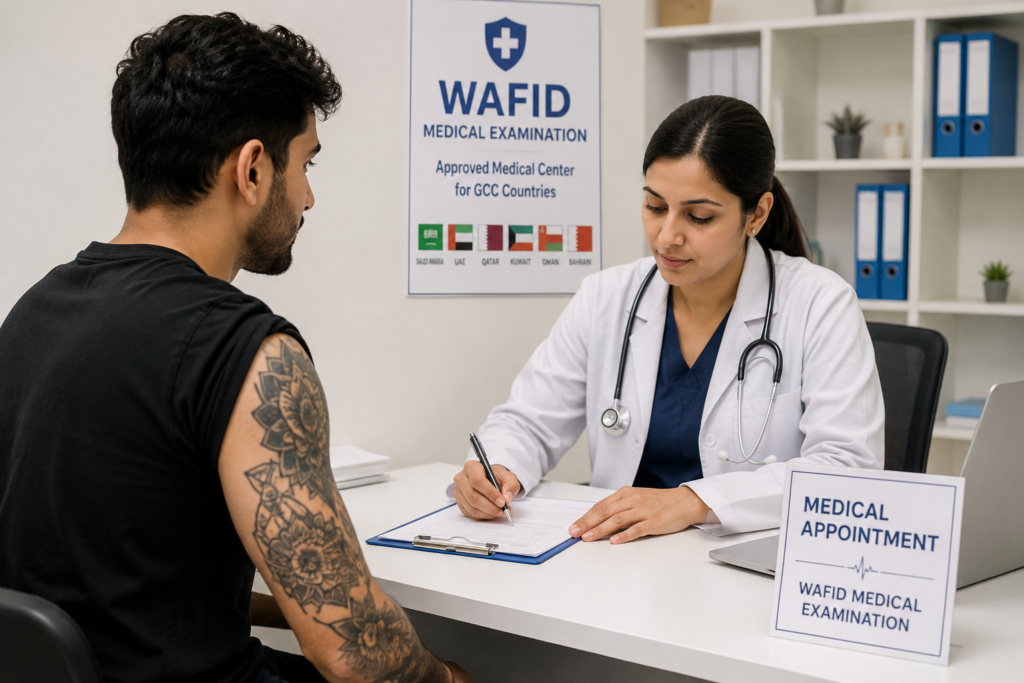
A lot of individuals who seek to be employed in the Gulf countries are usually anxious about whether or not they will be able to secure a medical clearance, Wafid, with a tattoo. Being a compulsory procedure that workers and residents visiting GCC countries must undergo, the Wafid medical examination makes its applicants, of course, curious about what aspects of their medical condition can influence them. Tattoos can be found conveniently in most cultures and professions, whereas there are many concerns regarding the perceptions towards tattoos during the medical screening session. The knowledge of the intent of the examination of the Wafid and the purpose of tattoos in medical evaluations may assist applicants in taking part in the procedure with a sense of security and prevent the appearance of unnecessary nervousness.
Knowing the purpose of Wafid Medical Screening
The main aim of the Wafid medical examination is to establish the medical fitness of an applicant to live and work in a Gulf country. The screening is concerned with detecting of communicable diseases and severe health conditions, which might become a threat to the health of the population. Health experts perform a battery of tests that can involve blood analysis, chest x-ray, physical examinations and other tests depending on the destination countries requirements. The test is also aimed at the evaluation of health condition instead of individual attractiveness, clothing style or body decoration.
Do Tattoos directly cause Medical Rejection?
In the majority of cases, possessing a tattoo is not a sufficient reason to receive a medical rejection in the course of the Wafid examination. The concern of medical authorities is usually based on the state of health of the applicant and not the tattoos on the body. An observable tattoo is not regarded as a disease or medical disorder. Medical examiners might however give a bit more attention to the tattoos due to the health hazards linked with unsafe tattooing. It all depends on determining the existence of any underlying medical reason as opposed to the tattoo itself.
Medical Examiners might have reasons to enquire about tattoos
When conducting a physical examination, physician can observe tattoos and sometimes inquire about them. This is not typically due to taboos on tattoos but the fact that some of the tattooing processes, particularly those that are done in non-sterile environments, may put the body at a higher risk of being infected by blood-borne diseases. There is a risk of transmitting diseases like hepatitis B, hepatitis C and HIV using contaminated tattoo equipment. Consequently, the blood tests made within the Wafid medical process become the more critical feature as compared to the tattoo itself. There is usually nothing to worry about with applicants in good health with no infectious disease and tattooed.
Factors That Do Play a role in Medical Clearance
The outcome of the necessary health screenings makes the medical clearance decisions as opposed to body art, or such conditions as active tuberculosis, some infectious diseases, or other relevant health problems diagnosed during the test. The medical examination is to assure conformity of applicants to the health standards provided by GCC authorities. Both a single tattoo or multiple tattoos, the classification depends on the general medical state and laboratory and diagnostic tests conducted during the investigation.
Getting ready to your Wafid Medical Examination
On the one hand, applicants who have a tattoo must treat their Wafid medical appointment in the same way as other applicants. All necessary documents should be carried, precise information should be given and instructions followed as given by the medical center. In case of a new tattoo that is in the process of healing, applicants must make sure that it is well taken care of in order to prevent temporary skin infections and complications. Above all, one should not panic, just because of a tattoo. The medical clearance of Wafid is largely dependent on the health condition, and having a tattoo alone is not likely to hinder the issuance of medical fitness approval to work/reside in the gulf.