
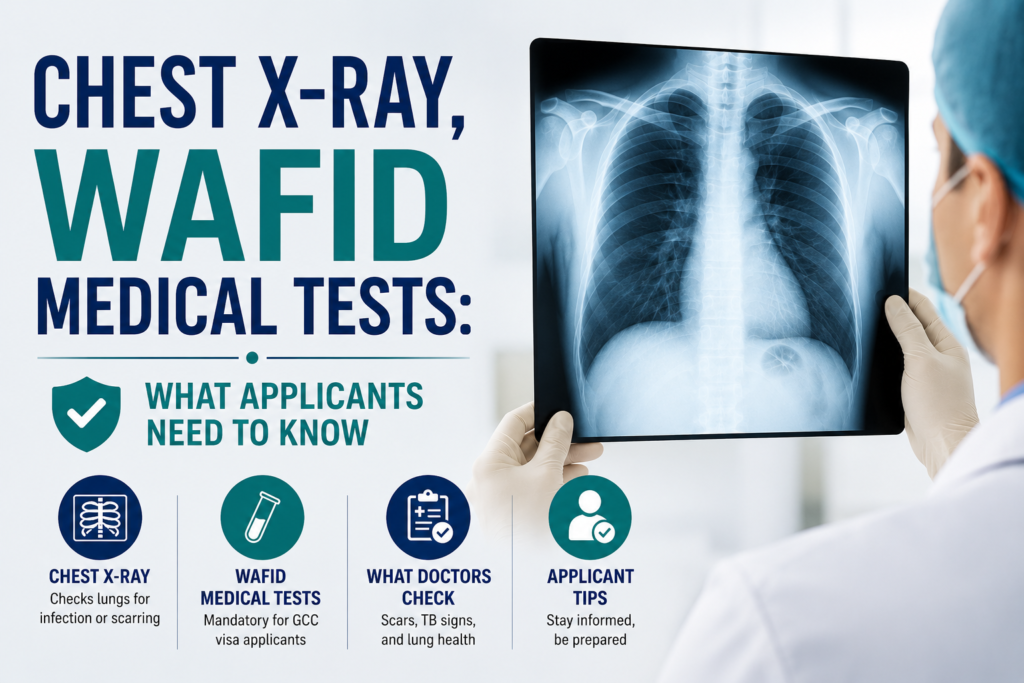
The Wafid medical examination is a significant component of the visa approval process to those intending to work or live in one of the GCC countries. The chest X-ray is one of the most scrutinized parts of the examination. When most applicants are told they have scars from chest x-rays due to past illness, infections, or other medical conditions, they also become concerned. The knowledge about the way these scars are examined during the Wafid medical test may assist the applicants to prepare more and to avoid undue anxiety. Although the presence of any scar on the lungs does not necessarily lead to a negative analysis of the medical report, it can entail further study, based on its nature and medical value.
Chest X-Ray Scars: What Are They?
Scars in a chest X-ray are scars in the lung tissue, which has been healed following an infection, inflammation, injury, or some medical conditions. These scars commonly show up on the image tests a long time after an individual is completely healed. Common causes include:
- Previous tuberculosis (TB)
- Pneumonia
- Lung infections
- Chest injuries
- Some lung diseases that are inflammatory.
These scars in most situations are manageable and do not interfere with the health or capability of work of a person. Nevertheless, a Wafid medical checkup will see radiologists scanning chest X-rays closely to find out whether the results are showing an old yet healed condition or a disease that is still going on and may be a health threat.
The importance of chest X-rays with Wafid Medical Tests
The main aim of chest X-rays in Wafid medical examinations is to detect ailments that can influence the health of the population, especially communicable diseases, like active tuberculosis. GCC nations have high medical standards to safeguard their citizens and employees. Consequently, any on-site aberrations in a chest X-ray can get extra care.
Medical examiners are also assessing the presence of any possible active infection as well as scars. Scars of a previous illness are frequently treated without the same treatment as indications of current sickness. It is a matter of the medical examination, radiologic results, and also any other exams that are ordered by the testing authority.
Other Evaluations of the Applicants Who Have Scars
In case scars on the chest X-ray are found, the applicants might be requested to have some additional medical inquiries. This does not imply that the applicant will be automatically given an adverse outcome. Further assessment assists physicians to determine the inactivity of the scar and whether it is not a health issue at hand.
Further tests can be
- Repeat chest X-rays
- CT scans
- Sputum tests
- Specialist consultations
Such tests give a more precise view of the health of lungs and allow to confirm the compliance of the applicant with GCC laws on the issue of medical fitness. Collaboration with the medical authorities and the proper fulfillment of the supplementary tests can prevent delays in the visa process.
Preparation Before the Examination (applicant side)
Patients who are aware they have a history of lung disease and/or had treatment for tuberculosis previously should bring a copy of their medical records to their Wafid appointment. Evidence of effective cure and recovery may prove useful as long as there are inquiries during the assessment procedure.
Also, it is important to respond to all the questions in medical history truthfully and properly. Any efforts of hiding past medical conditions might create difficulties in the assessment. To facilitate an easier review process, one should come with supporting medical documents that will give the medical examiners necessary background information as per any obvious scars.
Final Thoughts
Applicants who take Wafid medical tests to guarantee their medical fitness may well be scared by the thought of chest X-ray scars, but this does not necessarily mean that they are medically disabled. The important thing is whether the scar is an indication of a healed or of active disease. Medical experts analyze the individual cases diligently by the set rules and, in certain cases, by subjecting the patient to further examination.
It should prepare applicants who have some history of lung conditions, but they are not to be worried. By knowing how they will be evaluated, having the right medical records, and cooperating with any subsequent tests, they will be able to approach their Wafid medical test with more levelheaded confidence and understanding.